June 23 is National Pink Day

by Janine

Celebrate the color pink in your classroom!  Here are a few ideas to get you started.  And remember, pink doesn’t have to be just for girls!

  • Finger Paint with red and white paints so the children can experiment and make different shades of pink in their picture.


  • Create a pink scavenger hunt.  Have the children search for things that are pink throughout your classroom.
  • Serve a pink-themed snack.  Some ideas are pink lemonade, raspberry sherbet, strawberry ice cream, or even have the children mix their own cup of pink pudding (vanilla pudding with a few drops of red food coloring).

  • Plant a garden using a variety of pink flowers.
  • Have a dance party and add pink scarves and balloons for extra fun.
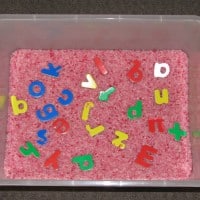
  • Add pink rice to your sensory table.

  •  Read Pinkalicious, by Victoria and Elizabeth Kahn

Have fun and think pink!  We’d also love to hear how you can incorporate pink into your classroom on June 23rd!

Facebooktwitterredditpinterestlinkedinmailby feather
Posted in Activities, Authors, Janine | Tagged , , , , , , , , , , , , , , | 4 Comments

For the Birds

by Kay Mishkin

No matter where you live, you can look around you and see birds.  Sometimes we don’t pay any attention, and those feathered friends may seem invisible,  but if you are quiet and attentive, you will notice them, going about their business in a purposeful and interesting way.

By calling your day care children’s attention to birds, you add a new dimension to your nature studies.  Many benefits result, including:

New vocabulary:  feather, beak, fly, glide, perch, build nest, hop, peck, plus many opportunities to use conversation about what the birds are doing and why.

Appreciation of difference so many different kinds of birds.  Name the birds as best you can, from robin to seagull to duck to wren to pigeon.   Listen to the different noises they make!  It is a good exercise in stillness to stay quiet and hear the sounds of the birds, best early in the morning and late in the afternoon.

Helping activities:  Children can help the birds by sharing in providing a bird feeder, especially in the winter.  In the spring they can put out string, yarn and other items for nest building.  If they spot baby birds, children can observe the adult birds finding food and feeding their young.  You can discuss with them ways to help a baby bird if they find one.

Expanding imagination:  Children may want to pretend to be birds, create nests and fly, talk about what it might be like living high in the trees or looking down on us.

Visual arts:  It would be fun to paint with feathers (you can buy them at a craft store) or use materials to draw, make collages of bird pictures cut from magazines.  Stamping would be fun, with images of bird feet, which you could stamp in various patterns… be creative!

Books and Music Look in your local library for stories featuring birds.  Look through your music collection.  I’m sure you will find songs with birds. One that comes to my mind is:  “When the red, red robin comes bob, bob, bobbin’…”

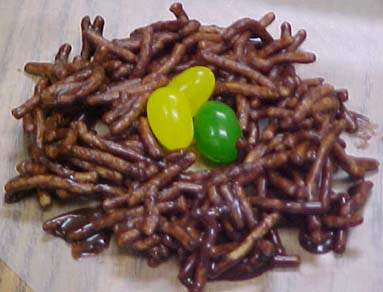
Noodle Nests – A recipe “for the birds!”

  • 1 tub (16 oz) of your favorite ready-to spread frosting. (or your homemade)
  • 4 cups cooked chow mein noodles
  • small jelly beans or green grapes
  1. Cover a cookie sheet with wax paper
  2. Heat the frosting, stirring constantly, until it is liquid.  Remove from heat.
  3. Stir in the 4 cups of chow mein noodles and stir until they are all coated.  Drop the mixture by ¼ cup about 1 inch apart on the cookie sheet.
  4. Make a hollow in each using the back of the spoon.  Let stand until firm.
  5. Use jelly beans or perhaps green grapes to be eggs in the nests.  Makes approx 16 nests.

Once I Saw a Little Bird by Mother Goose

Facebooktwitterredditpinterestlinkedinmailby feather
Posted in Activities, Kay Mishkin | Tagged , , , , , , , , , , , , , , , , , , , , , | Leave a comment

May is “Get Caught Reading Month”

Get Caught Reading Month

by Janine

May is “Get Caught Reading Month”.  Here are some tips and fun ideas to take reading to the next level in your program!

  • Create a cozy spot for reading.  Add floor pillows and soft lighting.  This can be a great spot for children to calm down and relax with a book.
  • Have puppets and stuffed animals for favorite books.  The children can use them to act out the stories.  They can also be great props for you to use during a group story time.
  • Try creating some felt stories.  These are great ways for a child to follow along and sequence a story and the characters.
  • Include related art activities in your planning.  This is a great way to extend the story.  Try extending it into other areas as well . . . if you read a book about bugs, take a nature walk.  If you read about shapes, go on a shape hunt around your classroom.  Get creative!
  • Take reading into the kitchen by preparing a snack that goes along with your book.  Use food coloring to make green eggs and ham.  Celery with peanut butter and raisins can be ants on a log.
  • Have the children make up their own story.  You provide the illustrations and let them tell the story in their own words.  You can also do the reverse by having the children illustrate the story.
  • Have a story book day where you encourage each child to dress as their favorite character from a book.
  • Invite parents in to read their favorite children’s story to the class.
  • Try listening to books on tape for an easy transition into nap or quiet time.
  • Use a spool of yard to create a story web.  Whoever is holding the yarn starts the story and then holds on to the end piece while rolling it to a classmate.  This child then adds a part and holds on to the yarn and passes it along again . . . the children love the visual of the web and it encourages creativity and verbal skills.

The possibilities are endless.  I hope you can catch your class reading soon!

Click Here to enroll in the online class: Using Books and Stories!

Additional Resources:

http://www.childcarelounge.com/environments/library-area.php

http://www.childcarelounge.com/activity/circle-time.php

https://blog.childcarelounge.com/?p=168

Facebooktwitterredditpinterestlinkedinmailby feather
Posted in Activities, Janine | Tagged , , , , , , , , , , , , | Leave a comment

Child Care Provider Appreciation Day is May 9th

by Joni

How It Started:

National Provider Appreciation Day is a day of recognition celebrated annually on the Friday before Mother’s Day. The day was spearheaded by a group of volunteers in New Jersey in 1996. These individuals saw the need for a  day of appreciation and recognition for child care providers and initiated a pilot program within their local network that was met with great enthusiasm by parents and providers. This day has been supported by groups in all 50states as well Canada, Europe and Asia. Supporters have initiated proclamations that have been signed by many local governments and governors, gained media coverage, and planned events where business and community leaders as well as parents have honored child care providers on this important day.

Ode to Day Care

Little children come to me for hugs and books and such
I care for all their simple needs and I also fix them lunch.
I pick up toys, I mop their spills and often dry their tears.
I change their diapers, settle fights, and kiss away their tears
I tie their shoes, I button coats and push them on the swing.
I really love these kids you see but there is just one more thing
Call me Mom or Aunt or Florence, and those names just might fit.
But please don’t call me SITTER because I never get to SIT!
~ author unknown

Who Do We Appreciate?

Child care workers and teachers are indeed much more than babysitters. Most have received specific training or education and work in programs that are specifically designed to promote the optimal growth, education and development of young children. Each day we intrust these people with our most precious resource; our future. Yet sadly, childcare remains one of the most under paid and under recognized professions.

The Center for the Childcare Workforce gives us a profile of the average childcare provider and the challenges they face. The daycare workforce is 98% female and one-third of those are women of color. The average center-based child care teacher nationwide earns roughly $7.00 an hour, despite above-average levels of education. Roughly one-third of teachers are paid the minimum wage. Even those at the highest end of the pay scale, who are likely to have a B.A. degree and several years of experience, earn on average barely $10.00 an hour. Family child care providers, who care for small groups of children in their own homes, earn even lower wages: providers who are subject to licensing or other forms of regulation earn less than $9,000 per year after expenses, and non-regulated providers earn less than $6,000. Despite a high exposure to illness on the job, fewer than one-third of child care workers have health insurance. Even fewer have a pension plan. Many are expected to work without breaks, and often for extra hours without pay.

How to Say Thanks

Showing your appreciation to a child care provider need not be an expensive or elaborate gesture. Your are sure to warm a caregiver’s day simply by taking a moment to remind them how much they mean to you and your child. A simple card or gift made by the child would surely be welcome. If you purchase a gift for a provider, you may wish to keep it simple. Gifts that support their work or help them “pamper” themselves, are always popular.

Check out some Teacher Appreciation Ideas:
http://www.childcarelounge.com/director-articles/teacher-appreciation.php

Child Care Lounge is showing appreciation to child care providers by rewarding YOU:
http://www.childcarelounge.com/contests/teacher-appreciation.php

Facebooktwitterredditpinterestlinkedinmailby feather
Posted in Administration, Authors, Joni | Tagged , , , , , , | Leave a comment

Social Stories and How They Can Help

by Janine

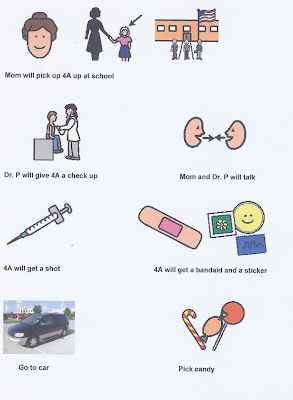
Social stories are short descriptions of a particular situation, event or activity, which include specific information about what to expect in that situation and why.  These stories are often illustrated to assist visual learners.  Originally designed for children at the higher functioning end of the autism spectrum, social stories can also be helpful for young people and adults.

Many times, adults think of social stories as benefiting children with autism.  However, these stories can benefit all children who are nervous or unsure about an unfamiliar situation.

Social Stories take something that is unknown to a child, and places it in a context that is easily understandable.  They let the child know what to expect, which alleviates many fears regarding the unknown situation.

\

Social stories can be used for a wide range of unfamiliar situations, such as doctor or hospital visits, what

to expect at holiday events or parties, going to school, how to make friends, how to behave in community settings, flying on an airplane, and more.

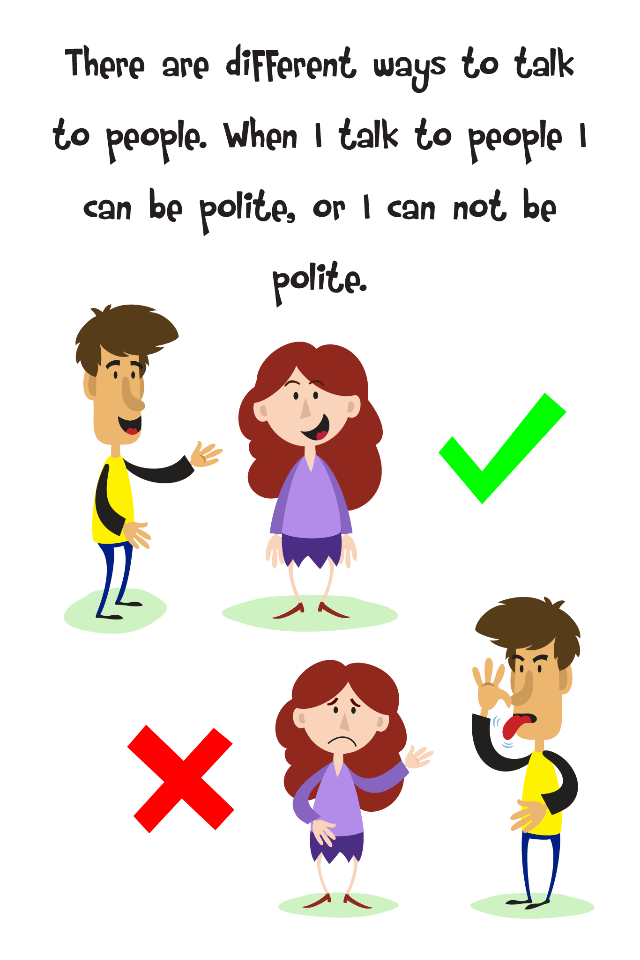
In a preschool setting, social stories can be written to explain many social situations, such as sharing, playing with others, classroom visitors, the daily routine, self-help skills and field trips.


Here is a video version of a social story about kicking and biting:


Click Here for an illustrated social story about riding the bus.


When creating a social story, it is important to keep these things in mind:

  • Make sure your story is age appropriate.  A social story written for a preschooler may not be the same for a child in 3rd grade, even if it is explaining the same situation.
  • Use concrete examples the child is familiar with.
  • Use words and pictures the child understands.
  • Avoid referencing things that are known to cause the child anxiety.
  • Also, remember, it is a story, so it needs a beginning, middle and an end.

Social Stories can be an effective way to prepare a child for something new and unfamiliar.  It can ease their fears and anxieties and turn what could possibly be seen as a negative or scary experience into a positive one.

For more information regarding Social Stories, please reference these sites:

Facebooktwitterredditpinterestlinkedinmailby feather
Posted in Activities, Janine, Uncategorized | Tagged , , , , , , , , , , , | Leave a comment

March is Music in our School Month

by Janine

Including music in your program and helping to cultivate a love of music in the children you teach can have lifelong benefits.   Preschool music and movement plays an important role in child development. Children who play or sing music regularly perform better in reading and math when they begin elementary school. Music along with movement increases both fine and gross motor skills and helps develop hand-eye coordination.  In addition, those actively involved in music also tend to have high self-esteem and are better at playing with others.  Music also helps relieve stress and encourages creativity.

The article, Music Matters (http://www.aep-arts.org/wp-content/uploads/2012/08/Music-Matters-Final.pdf) explains some of the above listed benefits in detail.

Since March is Music in our School Month, we wanted to share some fun musical ideas to boost your preschooler’s learning power!

Music is Science:  Make your own xylophone.  Fill an assortment of glasses or jugs with varying levels of water. Line them up in order from least to most full. Give your child a wooden spoon and have them experiment with the different sounds. For a pretty variation, add food coloring to the water and make a rainbow.

Music is Mathematical:  Create your own band!  Give each child a musical instrument to shake, rattle and roll with.  Some instrument ideas are bells, shakers, rhythm sticks, tambourines, triangles, etc.  You can also get creative with what you have on hand, such as turning a plastic bowl and wooden spoon in to a drum, or filling a Tupperware container with rice to shake.  This will help a child practice rhythm, counting and patterns.

Music is a Language:  Sing!  Sing songs with rhymes.  Sing songs with sign language motions.  Sing songs with repetition.  Sing songs in a foreign language.  Simply stated, singings daily helps a preschooler practice, and develop their language skills.

Music is Physical Education:  Play Freeze Dance to get your class moving and practice listening skills.  You can also encourage creative movement by using props while dancing, such as ribbons, scarves, shakers, hula hoops, etc.

Music is Art:  Draw what you hear.  Play different types of music (slow, fast, country, rock, classical, salsa, etc.) Have the children draw what they hear.  This encourages creativity as well as fine motor skills.  You can also vary this activity and ask the children to act out the emotion the music makes them feel (happy, sad, excited, scared, etc.)  Classical music works great for this activity!

Facebooktwitterredditpinterestlinkedinmailby feather
Posted in Activities, Janine, Uncategorized | Tagged , , , , , , , | Leave a comment

Keeping your “cool” in the winter time

Keeping your “cool” in the winter time

(Seven ideas for beating Cabin Fever)

by Kay Mishkin

For those of you who don’t particularly enjoy the winter sports and activities, here are some things you might do to help you get through the season in a reasonably sane state of mind.

    • Look at your yearly calendar and pick out the week (or two) to be your vacation.  Make up a notice to post right now in your childcare announcing these dates, also note whether or not these are expected to be paid. Make other copies of the notice and hand it out to everyone.  No one will complain since the vacation is months away, but as it gets closer, everyone has had ample notice of their obligations, and You have time set aside for R & R.

    • Air out your daycare space once a day.  I know its hard to let in cold air, but it will invigorate you, eliminate some germs,  raise your spirits.   Breathe deep!
    • Our senses are under-stimulated in the winter, mainly because we wear so many clothes!  This goes for the children as well.  An activity to combat this could be to take off everyone’s’ shoes and socks, (Yours too!)  Massage feet with talcum powder or lotion, play “This little piggy” , dance around on various textures (a rough towel, smooth vinyl, soft blanket, furry fabric, gritty sandpaper, crinkly paper), finish up by sorting out the pile of shoes and socks, matching, using descriptive language, pretending to smell, PU!, always good for a laugh.
    • When you are out in the snow and it’s a good packing snow, make a herd of snow horses!  Create piles of snow to straddle and sit on, perhaps a lump for the horse’s head, maybe ears, and then everyone can ride out in the snow.  Yee Haw!
    • Another sensory activity – Fill the sink or dishpans with warm water and wash the toys.  Plan for spills with towels on the floor and remove outer clothing… splash away.  If appropriate, add a bit of bleach to the water and disinfect at the same time. Great for a mix of ages.
    • Take some of your quiet time to read over any of your paperwork… contracts, policies, fees,  enrollment forms, flyers, business card,  and do some reflective thinking about making any changes that occur to you.  We all change gradually, and what was perfect a year or two ago, may now feel outmoded.
    • Lastly, if you have forsythia bushes, clip some of the dead-looking branches, and bring the bouquet of sticks into the house, put into water and watch for the yellow blooms in about 2 –3 weeks.

Before you know it, spring will be on the way.

Facebooktwitterredditpinterestlinkedinmailby feather
Posted in Activities, Kay Mishkin, Topics | Tagged , , , , , , , , , , , | Leave a comment

Dr. Suess Birthday Ideas

by Janine

Dr. Seuss’ birthday is March 2nd!

Visit your local library and take inspiration from the many books written by Dr. Seuss.  We are sure you can come up with some creative and fun ideas of your own to help your class celebrate.  This is also a great time of year to invite parents into your program to read their favorite Dr. Seuss book to the class.

Here are some fun activities to get you started!


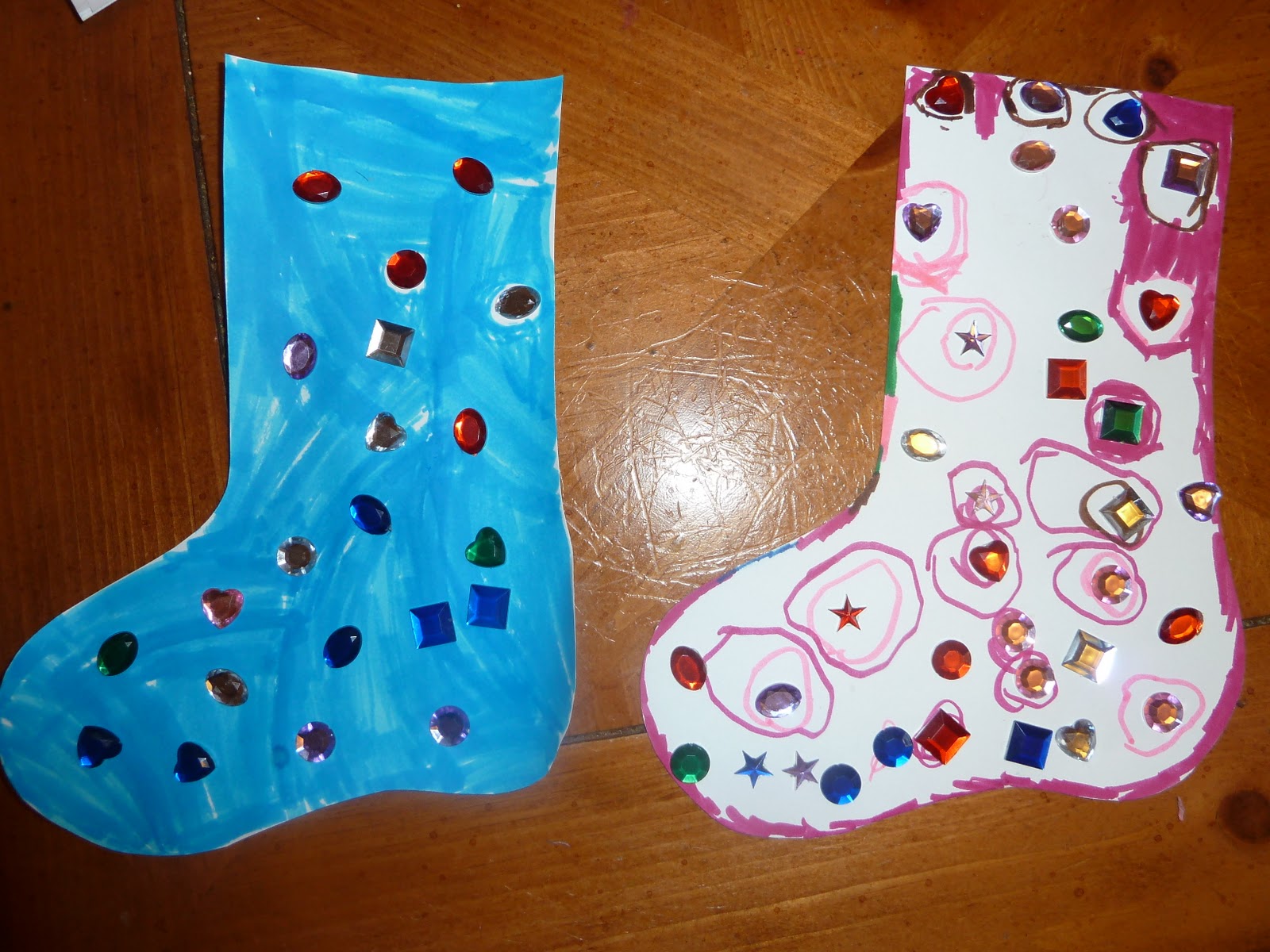
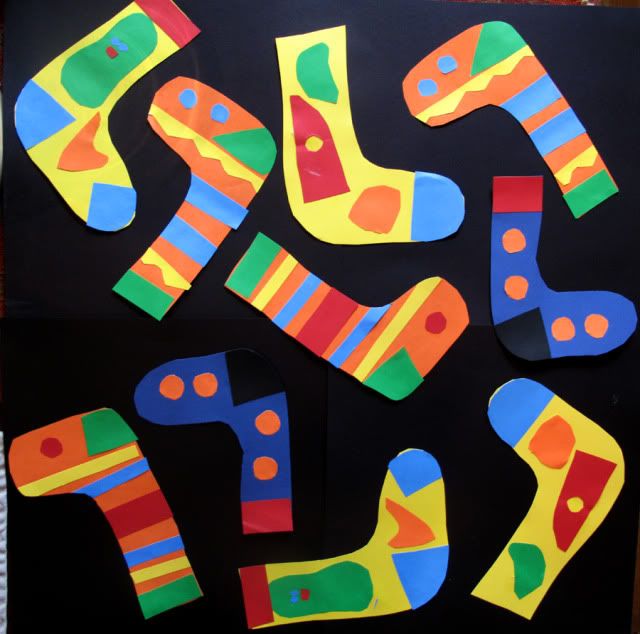
Fox in Socks

1.  Cut out a sock shape and have the children decorate the sock any way they like to decorate your room.

2.  Create a sock matching game for the children to play.


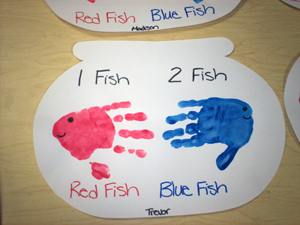
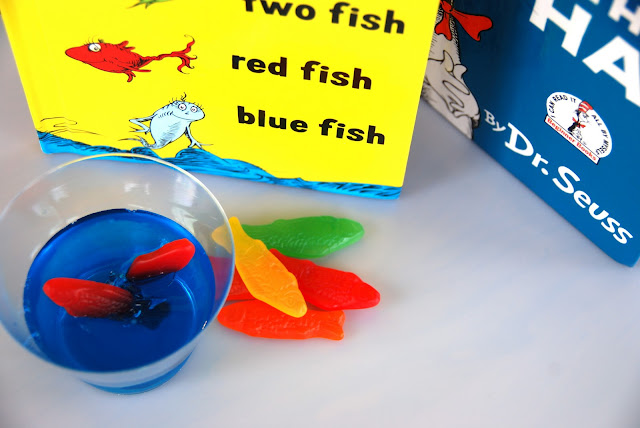
One Fish, Two Fish, Red Fish, Blue Fish

1.  After reading the book, have the children graph a handful of goldfish crackers.

2.  Use the children’s handprints to make a red fish and a blue fish in a fish bowl.

3.  Create a tasty “fish” snack with blue jello and gummy fish.


The Lorax

1.  Have the children make Truffala Trees out of play dough, pipe cleaners and pom poms.

2.  Create a colorful noodle snack by adding food coloring to boiling noodles.


Bartholomew & the Oobleck

1.  Create your own Oobleck for the children to play with!

Mix approximately 2 parts cornstarch with 1 part water and add a few drops of food coloring (For example 1 cup of corn starch and ½ cup of water). We actually mixed the food coloring into the water and then poured it into the bowl with the cornstarch and that worked well. Mix with your hands (of course)! I would suggest adding the water a little at a time until you get the consistency you want, but if it does get runnier than you like, just add a little more cornstarch.

2.  Make an Oobleck snack out of vanilla pudding with green food coloring!


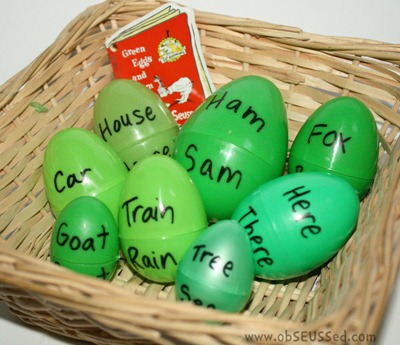
Green Eggs and Ham

1.  Create a rhyming game using green plastic eggs.  Have the children match up the rhymes to create the eggs.

2.  Make Green Eggs and Ham for a snack.  All it takes is pretzel sticks, a touch of white frosting or melted white chocolate and green M&Ms

.


Check out http://www.seussville.com/Educators/educatorClassroomResources.php?id=printables for additional ideas for educators.

Here is a link to some additional ideas as well http://www.childcarelounge.com/general-themes/dr-suess.php.

Facebooktwitterredditpinterestlinkedinmailby feather
Posted in Activities, Janine, Uncategorized | Tagged , , , , , , , , , , , , , , , , , , | Leave a comment

February is Heart Health Month

by Janine

February is Heart Health Month. Here are a few activities to use to help make this month more than just Valentine’s.

Heart Beats

Bring in a good quality stethoscope.  Show the children how to use the stethoscope to listen to their heart beat.  You can also have the children tap out the rhythm of their heart beat (lub-dub-lub-dub).  Ask the children if they can think of any way to change how fast their hearts are beating.  Then have the children jog or hop in place for several minutes and then let them recheck their heart beat with the stethoscope.

This is also a great month to invite a nurse or doctor to visit your program.  Ask them to bring their stethoscope and talk to the children about how to keep their hearts healthy and strong.

Movement and Healthy Hearts

Talk to the children about how to keep their hearts healthy.  Explain how regular exercise can help you maintain heart health.  After practicing some simple exercises, create a display to share with parents.  Cut a large red heart from poster board.  Have the children search through magazines to find pictures of people engaging in exercise and healthy activities to paste onto the heart.


You can also try creating some heart healthy movement/exercise games for your classroom.  Draw or paste pictures of simple exercises on a poster board.  Have each child toss a heart shaped bean bag onto the board and ask them to do the exercise their heart lands on.

Foods and Healthy Hearts

Display a selection of foods, food packages, or pictures of foods that promote healthy hearts.  For example, you might include pictures of chicken and fish, a variety of brightly colored fruits and veggies, bottles of pure juices, and packages of whole grain cereals and breads.  Have the children cut pictures of heart-healthy foods out of magazines and store ads. Have the children choose pictures and glue them onto paper plates to create “heart-healthy meals”.

Community and Healthy Hearts

Have the children create Valentines to share with your local children’s hospital.  Ask that they be shared with the Pediatric Heart unit.  This is a great way to introduce the children to community service while placing a smile on someone else’s face when they receive their hand made card.

Heart Healthy “Conversation Hearts”

Have the children make their own version of “conversation hearts” to decorate your classroom.  Encourage them to list heart healthy tips, foods and exercises on them.

Go Red, Get Active, Eat Healthy! Make February a Heart Month to remember in your program!

Facebooktwitterredditpinterestlinkedinmailby feather
Posted in Activities, Janine | Tagged , , , , , , , , , , , , , , | Leave a comment

Child Care Room Arrangement Tips

  • Create clear visual boundaries, making it apparent to children where learning areas stop and start. Define child care areas with shelving units, equipment with backs, area rugs, etc.
  • Each learning area should be separate, and its own entity and area.
  • Strategically arrange your room to eliminate runways. Long, straight isles and paths encourage running.
  • The Art Area and sand/water play should be located on tile and by sinks if possible, for easy clean up.
  • Provide visual order, with a sense of logic. Group similar things together. Display materials so that they can be seen in labeled bins, baskets, and boxes.
  • Avoid having any “blind spots” or areas where children cannot be seen.
  • Separate quiet and loud areas so that children can respect each other’s play experiences.
  • Create a soft, quiet area where a child can choose to be alone.
  • Pull equipment away from the walls. Utilize your equipment to create “nooks” and to visually invite people to come all the way into the classroom.
  • Have any needed supplies and materials close and accessible to the children (smocks, paper towels, paintbrushes, garbage can, etc) to encourage independence.
  • Areas should indicate logical use of the materials. For example, if the tables are located right by the manipulative shelf, children are given the cue to take those toys to the table.

Tips for Arranging Infant and Toddler Care Rooms

  • Cribs are to be spaced (see your state regulations for specific requirements), and should not be touching or be too close, for health and safety reasons.
  • There should be a “Play Area” away from where the cribs are. This will prevent playing babies from grabbing or shaking cribs and waking sleeping infants. The “Play Area” should have ample space for mobile infants to crawl, move around, and safely explore.
  • Safety is always first and foremost! Make sure that any piece of furniture or equipment that is freestanding is durable and sturdy enough for a child to pull himself up on. Make sure that the classroom is completely “childproofed,” and anything within possible reach is safe for infants and toddlers. Having a “childproofed” room should also eliminate the need for many “no’s.”
  • All areas of the room should be visible at all times. Mirrors can beused to see “blind spots.”
  • Strategically put the cribs of light sleepers in areas in which there is the least amount of traffic or stimulation.
  • The diaper-changing table should face the classroom so that the children are visible at all times.
  • Have a place for parents to place diaper bags. Often there are things unknowingly left in diaper bags (infant Tylenol, Ambesol, etc) that a curious toddler could get into if within reach.
  • Be mindful of traffic patterns. You will not want people continually walking through the sleep area, or stepping over mobile infants crawling in the play area, to get to the cubbies.
  • Keep things organized, labeled and in some kind of logical arrangement and order based on use.
  • Make sure that your environment offers many diverse opportunities to explore different textures and tactile experiences. Infants and toddlers also need opportunities to climb and challenge and develop their gross motor skills.

Facebooktwitterredditpinterestlinkedinmailby feather
Posted in Activities, Joni | Tagged , , , , , | Leave a comment