Tips for Minimizing the Impact of Staff Change

by Cathy Abraham

What are the main things parents want to know when there is a teacher change at the center?

a) That their child will still be well taken care of; and…

b) That the management team is capable and competent and will select and train the best candidate(s) for the job.

Since some staff turnover is inevitable, what can we do to minimize the impact on the children, families and the center?

  • Try to end things on a positive note with staff who are leaving.   It is much better to have someone quit – for many reasons – than to be fired.
  • If you only get one thing from an exiting staff, make it a nice goodbye letter to the parents.  Regardless of the circumstances, this is the professional, appropriate way to leave a center and the families.  Offer your help, if necessary, with the letter.  Have them give you a copy to look at prior to them handing it out to parents.
  • Make sure new staff members are properly introduced to staff and parents immediately.  Send out a letter and put up some background information on your new employees so parents know a little about them and will feel more comfortable.  Stress their related experience and education.
  • Make sure staff wear name badges and that the Parent Boards (or Bulletin Boards with staff info) have a name by a picture.  (It’s embarrassing to not know a Teacher’s name after they’ve been with the center a while.)
  • Don’t announce new hires in advance.  If they make other choices and don’t start, you have to explain this. No matter why they choose to not join us, you end up looking bad and lose credibility.  Unfortunately, this happens.
  • No matter why a staff member leaves, the Director needs to remain professional and ‘take the high road’.  If you imply anything negative, parents wonder why that person was allowed to work there.   In addition to losing your credibility, you risk breaching confidentiality.   Don’t get baited into a discussion – develop a neutral, positive standard line.   Example – “We wish her well” and move on to what pro-active things you’re doing to address this situation.
  • Let new employees know it is their responsibility for the first few weeks to introduce themselves to every parent &/or person they do not know  (if no one else is available to do so).
  • Invest in orienting, training and checking in with new staff.  They will feel more comfortable and this will show.  It never looks good when a parent asks about where medicine is stored or about the ‘lost and found’ and a staff member says “I don’t know.”
  • Children should be able to say goodbye.  If there is a situation in which they can not do this, this should be explained and processed with them.  Goodbyes due to happy life events should be celebrated and recognized. Children should be able to express their feelings on an on-going basis. Missing someone and talking about them should be okay.
  • If you think an exiting staff member will attempt to cause problems and say negative things, be mindful of leaving them alone with parents.  This kind of employee can cause many, many problems.
  • Do not have the negative exiting employee train his/her replacement.   Put your new employee(s) with a positive, knowledgeable mentor.
  • If you have a gap in staffing due to an employee leaving, and are asked about it, inform parents that you are going to select only the best candidate for the job and assure them that your priority is getting the best Teacher possible, not just a ‘quick fix’.  Let them know that you don’t want to hire just anyone, that you will take the time necessary to get someone really good.  Give the impression that you are in control of the situation.   Make sure curriculum, lesson planning, accountability, the routine, and overall quality do not lapse in this classroom.   Have a designated contact person for in the interim (the Teacher’s Assistant?) to minimize confusion and foster the day-to-day communication.
  • Remain calm about being short staffed.  It happens. You will get through it.  Your attitude  – calm or hysterical – will permeate the center.
  • Do not always try to talk people into staying.  If they have truly made the decision to leave for valid reasons, they will eventually leave anyway.  If you feel that it is a situation in which the employee is feeling discouraged or overwhelmed, and the situation can be resolved, probe and problem-solve with the employee.  Ideally situations can be addressed prior to escalating to this point.
  • Don’t refer to classrooms by Teacher’s names – i.e. “Miss Lisa’s Room.”  You’re in trouble when Miss Lisa leaves if that is how this room is identified.
  • Create a warm and friendly, inviting environment.  All staff should be greeting and interacting with parents and children.  This helps when Teachers are moved into different classrooms or when children are combined.
  • If possible, when a valued staff member is leaving, offer them a ‘Substitute’ position.  This conveys to parents that this person is not leaving because the center is a bad place or because of management.  Leave the door open for good staff – many people will return at some point in the future if they know it’s an option.
  • When you are short staffed or going through staff changes, let your current staff know that they are appreciated. This is when they really need a boost.

Prepare for and accept change.  It’s inevitable. Your attitude and your actions will determine how the center fares during these times.

Facebooktwitterredditpinterestlinkedinmailby feather
Posted in Administration, Cathy Abraham, Uncategorized | Tagged , , , , , , , , , , | Leave a comment

Food Allergies and Young Children

by Beth

If that moment hasn’t arrived yet, odds are that it will in your future.  You will have a child with food allergies in your classroom or home daycare. According to The Food Allergy & Anaphylaxis Network (FAAN), one in every 13 children is affected by food allergies. That’s a lot of kids.  My son happens to be one of the those children.  Let me first take a moment to tell you about him.  He is smart, quirky, loves the superheroes and video games, plays guitar, and most of all wants to just blend in to the group. He also happens to have multiple food allergies (milk, egg, peanut, treenuts and sesame) and asthma.  He just wants to fit in. Isn’t that what all kids want?

Right now there is no cure.  We rely on strict avoidance, and carry medication at all times.  The medication that is prescribed is an EpiPen.  An EpiPen is an auto-injector that contains a single dose of epinepherine.

There are 8 foods that are the cause of the vast majority of reactions.  Milk, egg, peanut, tree nuts, wheat, soy, fish and shellfish are the foods.

Trust me.  I’ve been in your shoes as a teacher, so I know that changing how you have run your classroom is hard.  I get that.  But the changes that you make, can lessen the chances of a child having a reaction. You are also reducing the chances of classmates witnessing a very scary scene while their friend needs care.  A lot of them are simple changes.  I have listed two that would have a huge impact.

  • Limiting or eliminating food in the classroom is probably the most important one.  A preschool program doesn’t have to be about eating all day long.  In addition to food allergies, diabetes and the obesity epidemic are other concerns.
  • Washing hands helps to keep your food allergic student safe.  It’s also a great way to keep colds and flu at bay.

As a caregiver, you should also be aware of the signs of an allergic reaction.  FAAN has a nice webpage that describes how a young child might describe a reaction.

Teaching children to be inclusive teaches them compassion. It is the right thing to do.  It might not be easy, but let me say it again, it is the right thing to do. Having age appropriate reading material is an easy way to have discussions about it.  There are many books that are out there these days.  Here are a few that we have in our collection.  Allie the Allergic Elephant: A Children’s Story of Peanut Allergies was a huge hit in our house when we bought it.  Another book by that author that we own is Cody the Allergic Cow: A Children’s Story of Milk AllergiesOne of the Gang is nice for younger children, too.  In addition to books for the children in your care, staff need some background information. I purchased this book for our school,  Food Allergies & Schools: Pocket Guide for Educators by Julie Trone, It is easy to read and filled with important information and tips.

Families like mine rely on people just like you every day.  There are times when their kindness has brought me to tears.  My son never asked for the cards that he has been dealt.  We just do the best we can with the most current information out there. Help along the way is always welcome!

Helpful Links:

Facebooktwitterredditpinterestlinkedinmailby feather
Posted in Beth, Health and Safety | Tagged , , , , , , , , , , , , , , , , | Leave a comment

Gobble! Gobble! Turkey Activities for Child Care

by Janine

It’s almost Thanksgiving, and that means it’s time to start making turkeys in your classroom!  Here are a few of my favorite Turkey crafts!

Name Turkey

Have the child trace and cut out their foot on brown construction paper to make the body of the turkey.   You can also create a simple body shape similar to that of a bowling pin.

Add a face – you can draw one on with markers or glue on google eyes, an orange beak and red beard

Make pre-cut feathers in fall colored construction paper.  Have the child choose enough feathers to spell out their first name.

Once the child has placed one letter of their name per feather, have them glue them to the back of their turkey cut out.

Handprint Turkey

Paint the child’s palm and thumb brown.

Paint the remaining fingers fall colors, such as red, orange, yellow and green.

Help the child make their handprint on a piece of construction paper.

Once the paint has dried, use a marker to add feet and a face.


Footprint Turkey

Paint the bottom of the child’s foot brown.

Help the child make a footprint on an over-sized piece of construction paper.

Once the paint has dried, have the child glue on googly eyes and beak.

The child can then glue brightly colored craft feather around their footprint to finish their turkey.


A few more turkey ideas . . . just for fun!

Play pin the feather on the turkey in your class – all you need is a big turkey cut out (go for the shape similar to a bowling pin), pre-cut feathers with the children’s names, masking tape and a blindfold.

*~*~*

Create a thankful turkey for your classroom.  Use a large turkey cut out, and have each child add a feather that has something they are thankful for written on it.

*~*~*

Make a handprint placemat.  Have the children cover a sheet of construction paper with their handprints in orange, red and yellow.  Once dry, place a brown turkey cut out in the middle.  Laminate or cover with contact paper to create a usable holiday placemat.

*~*~*

Collect fall leaves on a nature walk.  Have the child glue them to a turkey cutout as the feathers.

The possibilities are endless!  How many different turkey crafts can you create this month?

Facebooktwitterredditpinterestlinkedinmailby feather
Posted in Activities, Janine, Uncategorized | Tagged , , , , , , , , , , , , | Leave a comment

Young Children and Diabetes

by Ellen

November is Diabetes Awareness Month.

When most people think of diabetes, they tend to think that it has to do with eating too much sugar or being overweight.  For children diagnosed with Type 1 (or Juvenile) Diabetes, this is not the case.

Type 1 Diabetes affects about 3 million Americans, and each year 15,000 more children and adults are diagnosed.  So, what exactly is Type 1 Diabetes?  This form of diabetes is an autoimmune disease, where the body stops producing insulin, and it is not caused by diet or lifestyle.

Insulin is what keeps our blood sugar in a normal range.  When we eat, food becomes sugar in our blood.  This sugar (glucose) is our primary source of energy.  Insulin is then released into the bloodstream to turn the glucose into energy.

In diabetes, the pancreas doesn’t make enough insulin or the body can’t respond normally to the insulin that is made. This causes the glucose level in the blood to rise.  Without insulin, sugar stays in the bloodstream.  Over time, high blood sugars can cause significant damage to the body.  On the other end of the spectrum, when blood sugar is really low, it can cause loss of consciousness and even death.

So, children who have diabetes are dependent on insulin in order to keep their blood sugars at a normal level.  They typically have to test their blood sugars many times a day in order to make sure they are at an appropriate level.  Every time a child with Type 1 diabetes eats a snack or meal, they will need to take insulin.  The amount of insulin is determined by the child’s doctor and diabetes educators.  Children receive insulin one of three ways:

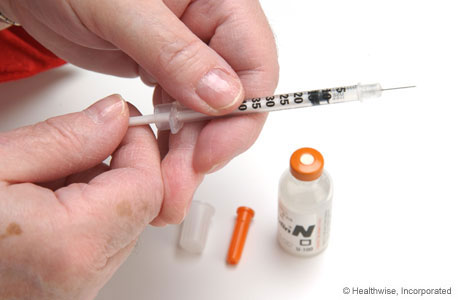
  • Insulin vial and syringe – insulin dosage is drawn up into syringe and injected into skin (usually arm, stomach or thigh)

  • Insulin pen – insulin dosage is ‘dialed’ up in the insulin pen and injected into skin  (usually arm, stomach or thigh)

  • Insulin pump – these small, computerized devices allow for a continuous flow of insulin to be released the body. The pumps have a small, flexible tube (called a catheter), which is inserted under the skin of the abdomen and taped into place.

Blood sugar is checked with a Glucose Meter.  A child will prick the tip of one of their fingers and draw blood onto a disposable test strip.  The meter will then tell the amount of glucose in the bloodstream.

A normal blood sugar level is between 70 and 120 mg/dL.  When a child is below 70, they may be feeling symptoms of low blood sugar.  

Signs of Low Blood Sugar (under 70) include:

  • Sweating
  • Nervousness, shakiness, and weakness.
  • Extreme hunger and slight nausea.
  • Dizziness and headache.
  • Blurred vision.
  • A fast heartbeat and feeling anxious.

Some young children are able to recognize when they are feeling low and alert an adult.  If you notice a child with diabetes who seems to be acting like she/he has any of the above symptoms, it is important to get this child some sort of fast-acting glucose.  Typically, when someone has low blood sugar, they can drink juice, eat cake icing, or special glucose tablets made for diabetics with low blood sugar.

Signs of High Blood Sugar (over 180) include:

  • Increased thirst
  • Headaches
  • Difficulty concentrating
  • Blurred vision
  • Frequent urination
  • Fatigue (weak, tired feeling)
  • Weight loss

Though diabetes can be a scary diagnosis, it simply involves some lifestyle changes.  If you have a child with diabetes in your care, it is important to not make them feel any differently.  Often, these children still eat candy and sweets from time to time, and they lead normal lives.

Each child with diabetes has a diet plan, set up with their dietician.  Knowing this plan is important.  Dieticians do tend to work their diet around school schedules, so most likely the child will be eating the same snacks and meals at the same time as the other children.  Be sure to meet with parents so that you are on the same page.  Parents should provide you with a child’s testing kit, insulin supplies, and emergency foods for low blood sugars.  When in doubt, ask questions.  At this young age, a child has most likely been recently diagnosed and the child and parents are still learning how to live with diabetes.  With your patience and understanding, you can help children with diabetes enjoy a normal day.

For more information and to learn more about Type 1 Diabetes, visit: http://www.jdrf.org/.

Facebooktwitterredditpinterestlinkedinmailby feather
Posted in Ellen, Health and Safety | Tagged , , , , , , , , , , | Leave a comment

Fun Fall Science Activities

By Janine

Fall is a great time to bring the outdoors inside and celebrate nature with your class.  Here are a few ideas to get you started…

Fun with Leaves:  Go on a Leaf Hunt

  • Chart or graph information such as how many types did you find as well as the colors of the leaves you found.
  • Use the leaves to make a collage showcasing the types and colors.
  • Make leaf rubbings of the different types of leaves you have found.


Fun with acorns:  Find and collect

  • Sort the acorns by size.
  • Count how many you found.
  • Talk about what animals eat animals and how they store them for winter.
  • Discuss that an acorn is actually a seed from an oak tree.  Talk about different types of seeds the children see and find in their food and plants.


Fun with Corn:  Touch and Feel

  • Fill your sensory table with corn kernels.
  • Talk about and feel the different parts of corn, including the stalk, husk, silk, cob and kernels
  • Talk about what animals like to eat corn.
  • Compare and contrast the corn we typically eat (sweet corn) and Indian corn.
  • List different foods made from corn.
  • Make popcorn, and talk about what makes the kernels “pop.”

Fun with Pumpkins:  Get messy

  • Cut open a pumpkin and let the children feel the insides . . . this is a great sensory activity.
  • Count how many pumpkin seeds are inside of the pumpkin.
  • Bake pumpkin seeds for some kitchen science fun.
  • Cut the shell of the pumpkin into different shapes to use for making pumpkin prints.
  • Play sink or float with small pumpkins.
  • Do a serration activity with pumpkins (small, medium, large).  Explore how they are the same and different.


Remember to take advantage of the changing seasons to bring new science experiences to the children in your program.  If you have any additional ideas for activities, please share them in the comments below.

Facebooktwitterredditpinterestlinkedinmailby feather
Posted in Activities, Janine | Tagged , , , , , , , , , , , , , , , | Leave a comment

National Childhood Obesity Awareness Month

By Janine

Did you know that September is National Childhood Obesity Awareness Month?  According to the Center for Disease Control, 17% (or 12.5 million) of children and teens between the ages of 2 and 19, are obese.  This rate has tripled since 1980.

In today’s society, the healthy choice is not always the easy choice.  We live in an environment that promotes fast food, increased portion sizes and inactivity, such as watching TV and playing video games.  It is our job as adults to help our children make healthy lifestyle choices.  Here are some ideas to help you promote a healthy lifestyle in your program.

Provide healthy snack and drink choices for the children in your program.  Think water, rather than sugary drinks and fruits and veggies rather than chips.  Learn more by reading about the Healthy, Hunger Free Kids Act, which are new rules for school lunches and breakfasts that ensure a higher nutritional standard including more whole grains, vegetables, and fruits, and less fat and sodium.  Click here link to view the article “USDA Announces New Breakfast and Lunch Guidelines.”

Limit media time in your program.   Turn off the TV and other electronics.  In a recent study, it was found that 8 to 18 year old adolescents spend an average of 7.5 hours a day using entertainment media, including, TV, computers, video games, cell phones and movies.  Start promoting healthy habits early.

Get the children up and moving!  Children should have at least 60 minutes of physical activity daily.  While the health aspects of physical activity are apparent, adding more movement to your program can also help to promote and facilitate learning.  Learn more by enrolling in our Moving and Grooving: Motor Skills and Movement class.

You can also discover move about the Let’s Move! initiative started by Michelle Obama.  Let’s Move! is a comprehensive initiative, launched by the First Lady, dedicated to solving the challenge of childhood obesity within a generation, so that children born today will grow up healthier and able to pursue their dreams. Combining comprehensive strategies with common sense, Let’s Move! is about putting children on the path to a healthy future during their earliest months and years. Giving parents helpful information and fostering environments that support healthy choices. Providing healthier foods in our schools. Ensuring that every family has access to healthy, affordable food. And, helping kids become more physically active. (Taken from the Let’s Move! website)

Helping to raise a healthier generation of children and reduce childhood obesity and its related health risks is everyone’s responsibility.  Help teach the children in your program healthy living choices and make a lasting difference in their lives.

Facebooktwitterredditpinterestlinkedinmailby feather
Posted in Development, Janine | Tagged , , , , , , , , , | Leave a comment

Coffee Filters, Clothespins,and Kitchen Scissors

by Diane

In my last post I gave you my list of condiments (Ranch dressing,ketchup,and peanut butter) every provider needs for smooth sailing at mealtimes, now I will give you my top 3 day care helpers. Coffee filters, clothespins, and kitchen scissors are my favorite day care must haves!

First up, my husband’s coffee filters. These thin little filters have so many uses, are compost able, and very cheap, 99 cents for 200! We use them as snack servers-the kids love the individual “paper dishes”. Crackers, pieces of fruits and veggies, and mini bagels are perfect in these. We also use them for arts and crafts. We Tye-dye them using markers and spray bottles filled with water. They also make wonderful snowflakes in winter. The filters can also hold beads,sequins,and any other roly-poly supply you may need during projects.

Clothespins are my second favorite,again, many uses and cheap. Any open food bag in my kitchen is being held closed using a clothespin. Art projects that require drying time are clipped to my shower curtain using these. Some of the Little Ones’ painting projects may need an extended dry time so we could have one piece of art work for up to 3 days. This gives us an ever changing art display in a rather drab bathroom! Clothespins also come in handy during dress up time. If something is a little too big , clip it tighter. They also work wonderfully for holding “super hero” capes on Little Ones and adults too. Kids just love to play with these and come up with their own uses and games while practicing their fine motor skills.

Last,but not least…my kitchen scissors. My own teenagers have been warned not to take my kitchen scissors out of my kitchen. They are not to be used to cut holes in jeans, or to cut unruly bangs, or to cut sports tape for your hockey sticks-they are for food only and require washing after using. My kids always read what I write so that was a little reminder for them. Now back to using them for day care. These are an awesome tool to have because sometimes the Little Ones are not real patient when waiting for their food. These are great for cutting sandwiches into quarters or just getting that pesky crust off for your pickier eaters. Pancakes,waffles,fruits,and veggies are all much easier to cut when using the scissors.I do allow some of the older “Littles” to help cut some of the softer foods and they really love the responsibility of being the assistant chef. These are also inexpensive, I just found the Betty Crocker brand at the Dollar Tree for, you guessed it, $1.00.

Coffee filters,clothespins, and kitchen scissors the three things I use daily. All three are inexpensive but priceless when it comes to making my day a little easier!

Facebooktwitterredditpinterestlinkedinmailby feather
Posted in Diane | Tagged , , , , , , , , , , , , , | Leave a comment

Welcome Back to School Ideas

by Janine

Starting the new school year off on the right foot is very important for both teachers and their students.  Some children may be excited and ready to learn while others may be a bit more reserved or even nervous about what to expect.

Here are a few fun ideas to welcome your class back to school!

Welcoming Gifts

Fill a bag with Lucky Charms and include a note telling the child how “lucky” you are that they are in your class!

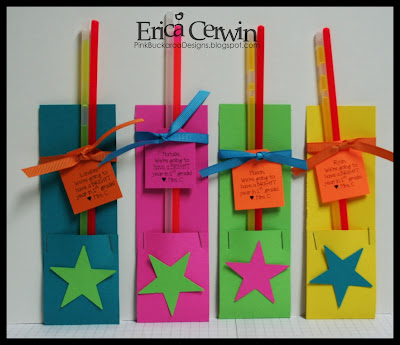
Tell the children what a “bright” year they will be having in your glass with some glow sticks.

Give each child a care package to help set the tone for your classroom.  Here are a few items to include:

    • an eraser — because mistakes are opportunities for learning
    • Smarties candies — because we all have different kinds of “smarts”
    • a pencil — because I know that you are sharp
    • a stick of gum — because we are going to stick together as a team
    • a Hershey kiss — because we have a safe and caring classroom
  • candy — because we are sweet and respectful towards each other

Welcoming Activities

All About Me!  Have your students draw and color their name and a picture of themselves on a large sheet of paper. They add things about themselves, including their birthdays and their favorite things to do. The posters are then displayed on the wall in the classroom.

Getting-to-Know-You Friendship Web –   Have the children sit in a circle.  The teacher starts with the ball of yarn, says their name and something about themselves then tosses or rolls it to a student holding on to the end of the yarn.  Continue the activity, creating a web of new friends until everyone in the class has hard a turn.

Classroom Scavenger Hunt – Create a list of simple words (or pictures) of classroom supplies that the children must locate in your room to help them feel comfortable in their new surroundings.

School Pictures –Decorate a large frame for the children to hold in front of their faces so you can take their picture in it.  Save the frame and re-decorate it for other memorable dates and events in your class such as the 1st day of school, the 100th day of school, the last day of school, the child’s birthday, etc.  Create a personalized photo album for each child to gift them at the end of the school year.

~~~~~~~~~~~~~~~~~~~~~~~~~~~~~~~~~~~~~~~~~~~~~~~~~~~~~~~~~~~~~~~~~~~

Remember, the school year is what YOU make of it!  You have the power to get your class excited to learn and have them looking forward to the adventures that await them throughout the rest of the school year!

If you have any additional ideas for the first day of school, we’d love to hear them!  Please share in the comments below.

Facebooktwitterredditpinterestlinkedinmailby feather
Posted in Activities, Janine | Tagged , , , , , , , , , , | Leave a comment

Christmas in July

Christmas in July

by Janine

http://3.bp.blogspot.com/-9ORhpibkk8g/ThhpQXHz8XI/AAAAAAAABsk/VJtZMKBD0fM/s1600/christmas+in+july.jpgWhile Christmas only comes once a year, it is something that many children think about year round.  Here are a few ideas to celebrate Christmas in July…giving the children in your care a sneak peak at December!

Set the mood.  Decorate a Christmas Tree…or even a Palm Tree.  String some lights and have children decorate the tree, either making homemade ornaments or ones purchased from the store.

Christmas Palm Trees2 Christmas Palm Tree   Decorating For The Holidays

Play some Christmas Carols.  Watch a holiday special.  Read a Christmas book during story time.  Children will be excited to see these crowd-pleasing favorites that are usually reserved for December.

Bake or decorate Christmas cookies.  This is a great way to include math and science with measuring and mixing ingredients.

http://1.bp.blogspot.com/_dTBYrtxZg-Q/TQi9xS4NXYI/AAAAAAAAC_o/EkWF2NhpDB8/s1600/PalmTreeChristmas1sfw.jpg

Have a snowball fight using white balloons.  You can also fill them with water for added excitement.

Do shaving cream art and have the children pretend they are playing in the snow.

Make a snow globe using a baby food jar and glitter.  Remember to choose a toy or figurine that will not dissolve in the water as well as to hot glue the lid on so the children can’t open them.

http://cdn.indulgy.com/R8/fu/Rc/167548048606503088gFPQwpvwc.jpg

Host a Jingle Bell Hop dance party for the children.  Encourage them to wear red or green and even a Santa Hat.

Decorate flip flops to make a Christmas decoration.  Be creative.  Use red and green paint.  Add jingle bells, ribbons, pine cones, poinsettias, glitter and more.

Make a melted snowman craft.  All you need is white, black, brown and orange construction paper, scissors and glue.  Cut the white paper into a squiggle shape to resemble a puddle.  Use the black paper to make circles for the eyes and mouth, the orange to make a carrot shaped nose and the brown for two twig-like arms.

Encourage the children to draw a picture of what they think Santa does while on vacation.

This can be a really fun theme filled day or even week of activities for the children.  Let your holiday magic do its work and inspire creativity and wonder.

Merry Christmas in July!

CHECK OUT OUR ONLINE CLASSES,CHRISTMAS IN JULY PROMOTION!

CLICK HERE TO START SAVING!

Facebooktwitterredditpinterestlinkedinmailby feather
Posted in Activities, Janine | Tagged , , , , , , , , , , , , , , | Leave a comment

Go Fishing Day Activities

by Janine

June 18th is Go Fishing Day. Fishing is a great summer theme for your classroom. Here are a few of my favorite ideas and activities to go along with this topic.Create your own magnet fishing game. Have each child decorate a paper fish. Then attach a paperclip near the mouth. Create a fishing pole or string with a magnet connected to the end so the children can pretend to fish. You can even use a small plastic pool to place the paper fish in to simulate a pond, or have the children paint a pond on a large piece of paper during art time.

Create a paper plate fish. Cut a triangle shape out of a paper plate. This makes a triangle opening to act as a mouth. The cut out triangle is then attached to the paper plate to make the fish tale. Get creative and have the children decorate their paper plate fish. A few ideas are using tissue paper squares, paints, glitter, or sequins. You can even have the children rip up small pieces of construction paper and glue them on the fish to make it look like scales.

Have each child make their own jello aquarium snack. You will need clear plastic cups, blue jello, jelly beans and candy gummy fish. Have the children place the jelly beans in the bottom of their cup to look like stones. Add jello to fill the cup half way, then let set. Once set, have the children add a plastic fish to their cup. Cover with jello and let set again. After a few hours, each child will have their own personal jello aquarium to snack on.

Make a handprint fish. You can either trace the child’s hand or use paint to make a handprint. Add a google eye as well as a hand drawn mouth. This craft makes a great bulletin board for your “school” of little fish! You can also have each child make an underwater scene by gluing small rocks to the bottom of blue construction paper, strips of twisted green tissue paper as seaweed and a few cheerios to look like bubbles.

Play Sharks in the Water. This game operates on the same premise as Cooperative Musical Chairs. Outline a large square on the floor with either masking tape or chalk. This area is the safe island and the area surrounding the square is the ocean. When the music begins children “swim” around the island. The stopping of the music indicates that sharks are coming and all player must retreat to the safety of the island. With each round the lines are altered making the island smaller and smaller. Players must make work together to make sure everyone has a safe place to get away from the sharks.

Facebooktwitterredditpinterestlinkedinmailby feather
Posted in Activities, Janine | Tagged , , , , , , , | Leave a comment